
Leading applicator of specialist coatings for the refurbishment of commercial properties across the UK
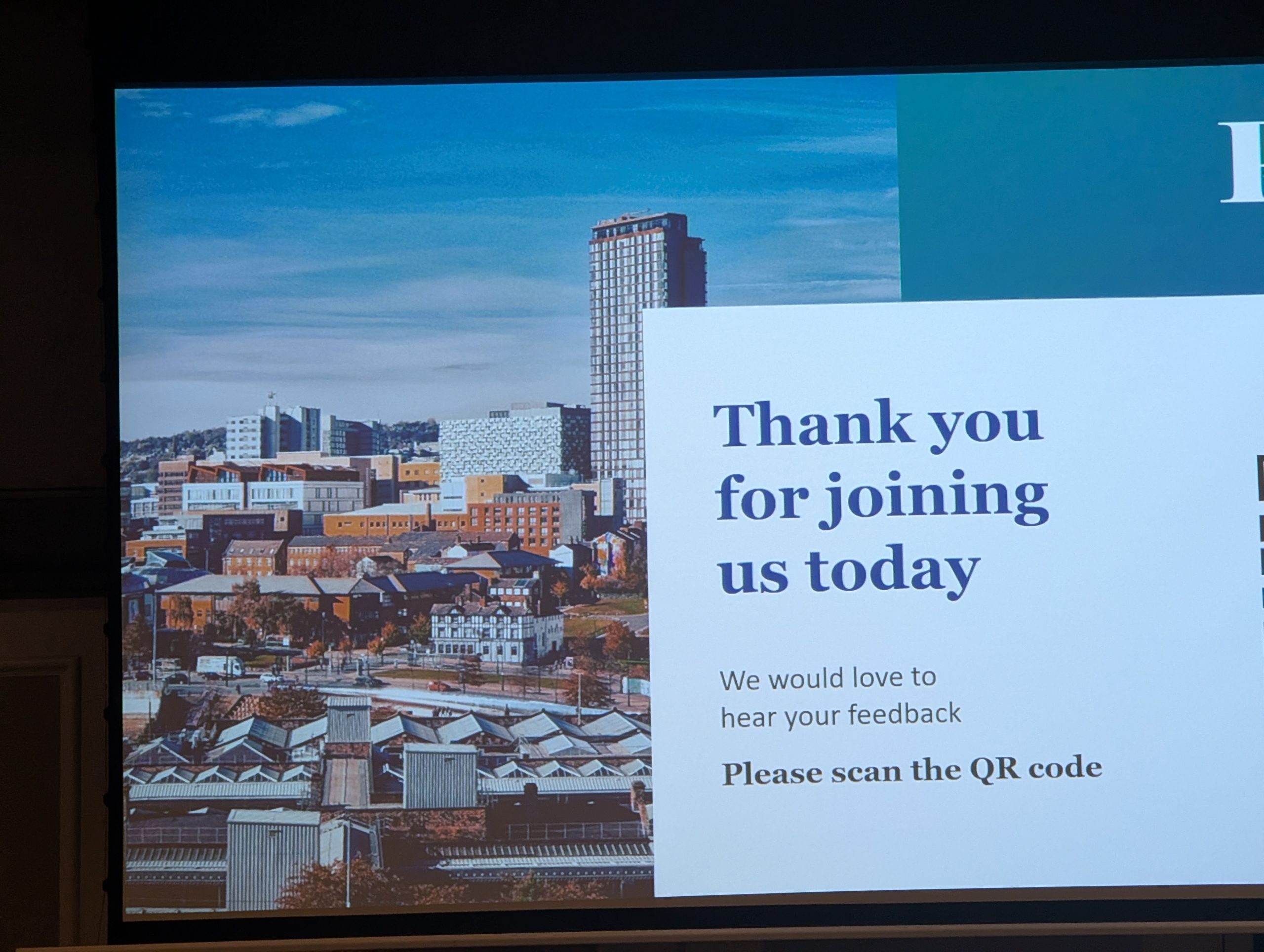
The Cladding Coatings team recently attended the Yorkshire Industrial & Logistics 2026 conference at the Leeds Marriott Hotel, bringing together developers, local authorities, investors, occupiers, contractors, and property professionals to discuss the future of Yorkshire’s industrial and logistics sector. The event focused on the opportunities and challenges facing the region, including investment, infrastructure, skills, sustainability, and the changing demands of occupiers.
As specialists in commercial and industrial refurbishment and restoration, we left the event with a the view that refurbishment is becoming increasingly important to the future of Yorkshire’s industrial property market.

Demand for High-Quality Industrial Space Remains Strong
One of the key market presentations from Kiran Bhalla of Savills highlighted that occupier demand across the logistics sector remains resilient despite ongoing economic uncertainty and geopolitical pressures. UK industrial take-up exceeded 23 million sq ft in Q3, while Yorkshire recorded its strongest third quarter for three years, with significant space currently under offer.
At the same time, speakers noted that the pipeline of speculative industrial development is shrinking, with supply expected to reduce in the coming years. Yorkshire currently has only a limited number of large speculative units under construction, creating potential shortages of high-quality space.
For owners of ageing warehouses, factories, manufacturing facilities, and logistics centres, this creates an important opportunity. Rather than waiting for new developments, many occupiers are increasingly looking towards existing buildings that can be modernised and upgraded to meet today’s requirements.
Refurbishment Supports Net Zero Objectives
The presentation from Michelle Burton at the West Yorkshire Combined Authority highlighted the enormous scale of retrofit required across the region. West Yorkshire alone has approximately 680,000 properties requiring retrofit improvements over time, while construction and retrofit activity play a crucial role in achieving net-zero objectives.
Commercial and industrial refurbishment of existing facilities can dramatically reduce embodied carbon compared with complete redevelopment. Extending the operational life of roofs and cladding systems avoids sending large quantities of material to landfill while reducing the need for new raw materials and manufacturing processes.
The Skills Shortage Is Driving Smarter Asset Management
Another important takeaway was the extent of ongoing skills shortages within the construction sector.
The event highlighted national and regional shortages across key trades including electrical, plumbing, heating, and surveying professions. Construction remains one of the sectors most affected by skills shortages, creating challenges for delivering future infrastructure and development projects.
What does this mean for industrial property?
In simple terms, replacement projects are likely to become more expensive and more difficult to deliver as demand increases and skilled labour remains under pressure.
This is another reason why preventative commercial and industrial refurbishment strategies are gaining momentum. By investing in planned maintenance and coating systems before major failures occur, building owners can avoid costly emergency repairs and maximise the lifespan of existing assets.
The most successful property portfolios are increasingly adopting long-term asset management plans rather than waiting until complete replacement becomes unavoidable.
Technology Is Reshaping Industrial Buildings
One of the most interesting sessions came from Matt O’Neill, who discussed how warehouses and manufacturing facilities are evolving into technology-driven environments.
Automation, robotics, AI integration, digital monitoring systems, and data-driven operations are changing the way industrial facilities function. Future warehouses will increasingly operate as technology hubs rather than simple storage facilities.
For building owners, this means the physical performance of the building is becoming even more critical. Modern occupiers require facilities that can support advanced equipment, efficient operations, reliable infrastructure, and high-performance working environments.
A dilapidated exterior or deteriorating roof can undermine what may otherwise be a highly productive facility.
As industrial occupiers invest in technology, they are also expecting higher standards from the buildings they occupy.
Power, Infrastructure and Deliverability Are Becoming Major Differentiators
A recurring discussion throughout the conference focused on power availability, planning constraints, and infrastructure challenges.
Speakers highlighted that power capacity and connection delays are becoming significant barriers to development, while development-ready employment land is increasingly limited throughout parts of Yorkshire.
Buildings that already benefit from established infrastructure and strategic locations often have a head start compared with new developments facing lengthy planning and utility challenges. When refurbished and modernised correctly, these existing assets can compete very effectively in today’s market.
Our Key Takeaway
The overarching message from Yorkshire Industrial & Logistics 2026 was that the future of Yorkshire’s commercial and industrial property market is not solely about new-build development. It is equally about improving, modernising, and futureproofing the buildings that already exist.
With demand strong, supply tightening, ESG requirements increasing, and occupiers becoming more selective, refurbishment has never been more important.
For owners of warehouses, distribution centres, factories, manufacturing facilities, and commercial premises across Yorkshire, investing in professional cladding restoration, roof coatings, corrosion protection, and external commercial and industrial refurbishment can unlock significant value while supporting sustainability goals and improving long-term asset performance.
The buildings that thrive over the next decade may not always be the newest. They will be the buildings that are best maintained, best performing, and best prepared for the demands of a rapidly changing industrial market.