How Can We Help You?
Please provide a few details below and we will respond to you as soon as possible.
Please provide a few details below and we will respond to you as soon as possible.

As more commercial property owners look to reduce energy costs and improve sustainability credentials, solar panel installations on industrial roofs have surged. It’s a smart investment: solar can significantly cut electricity bills, improve EPC ratings, and support corporate environmental goals. But there’s a critical issue that often gets overlooked in the rush to “go green” the condition of the roof itself.
Specifically, cut edge corrosion is one of the biggest hidden barriers to a successful solar installation. It’s a problem that can delay projects, invalidate warranties, and even lead to costly roof failures if ignored. Before any solar panels are fixed to a metal roof, the roof must be structurally sound, watertight, and protected for the long term. If cut edge corrosion is present, it needs to be treated first.
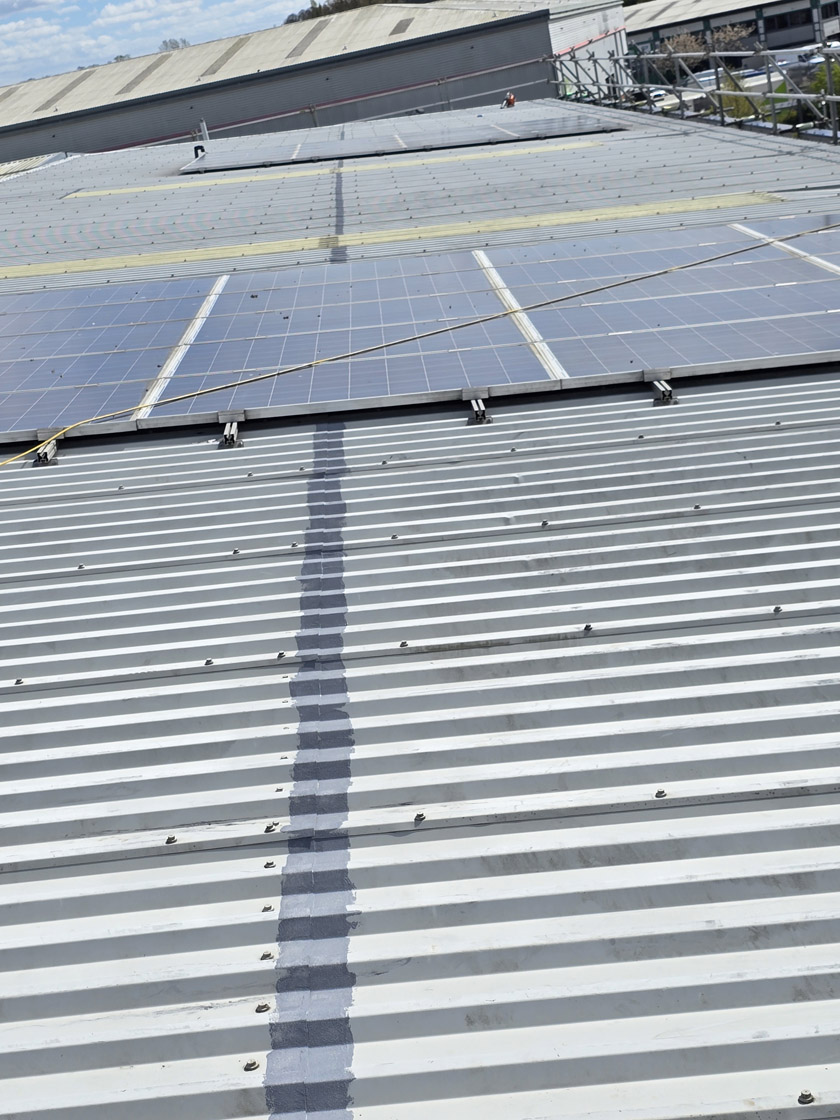
Why Roof Condition Matters Before Solar Installation
Solar panels add weight, fixings, and long-term load to a roof. Once installed, they are designed to stay in place for decades. That means the roof beneath them must be equally durable. If the roof is already showing signs of deterioration, especially at sheet edges and laps, the installation can trap moisture, accelerate corrosion, and make future maintenance extremely difficult. Solar installers are increasingly cautious about this. Many will refuse to install panels on a roof that shows visible corrosion, coating breakdown, or structural weakness. Others will proceed only if the client signs a disclaimer, which can leave the building owner exposed if problems arise later. A roof in poor condition is simply not a safe foundation for a 25‑year solar investment.
What Is Cut Edge Corrosion And Why Does It Matter So Much?
Cut edge corrosion occurs on metal roof sheets where the protective factory coating has been cut, typically at sheet ends and overlaps. Over time, weather exposure causes the metal to oxidise, leading to rust, peeling coatings, and eventual sheet deterioration. On its own, cut edge corrosion is a serious issue. But when solar panels are added into the mix, the risks multiply. Corrosion at sheet edges can:
Once panels are in place, access to the affected areas becomes extremely limited. What could have been a straightforward refurbishment becomes a complex, expensive job involving panel removal, reinstallation, and potential electrical disconnection.

How Cut Edge Corrosion Interferes With Solar Panel Fixings
Solar panels are typically mounted using brackets or rails fixed directly to the roof sheets or purlins. These fixings rely on the roof being stable, corrosion‑free, and able to hold the load. If corrosion is already present:
In severe cases, corrosion can cause fixings to pull through the sheet entirely. This is not only a structural risk but a major safety concern.
Warranties and Insurance: Why Corrosion Must Be Addressed First
Most solar panel manufacturers and installers offer long-term warranties, often 20 to 25 years. However, these warranties almost always require the roof to be in good condition at the time of installation. If cut edge corrosion is present and left untreated:
Treating corrosion first ensures that both the roof and the solar system are protected for the long term.

How Treating Cut Edge Corrosion Extends the Life of Your Solar Investment
A professionally refurbished roof provides a stable, long-lasting base for solar panels. Treating cut edge corrosion before installation ensures:
At Cladding Coatings, we use high‑performance systems such as Giromax and other flexible, UV‑resistant coatings designed specifically for metal roof refurbishment. These systems seal the sheet edges, prevent further corrosion, and create a durable surface that can support solar installations for decades.
Why It’s Harder (and More Expensive) to Fix Corrosion After Solar Panels Are Installed
Once solar panels are in place, access to the roof becomes restricted. Maintenance teams must work around the panels, often requiring:
This can turn a routine refurbishment into a major project. Treating corrosion beforehand avoids all of this disruption and cost.
A Smart Sequence: Survey → Refurbish → Install Solar
The most efficient and cost‑effective approach is:
Roof survey to identify corrosion, coating breakdown, or structural issues
Cut edge corrosion treatment and roof coating to ensure long-term protection
Solar panel installation on a stable, warrantied roof
This sequence protects your investment and ensures the building remains watertight and compliant.
Solar panels are a fantastic long-term investment for commercial buildings, but only when the roof beneath them is ready. Cut edge corrosion is one of the most common and most overlooked issues that can jeopardise a solar installation. Treating it first isn’t just good practice; it’s essential for safety, performance, and long-term value. If you’re considering solar panels for your commercial property, now is the perfect time to arrange a roof survey. We can assess the condition of your roof, recommend the right refurbishment approach, and ensure your building is fully prepared for a successful solar installation. Contact us to discuss.
Overview We are seeking a dedicated team of two Cladding Sprayers to join our construction team. Would suit a father & son team or experienced sprayer with own Labourer. The successful candidates will be responsible for applying protective coatings and…