How Can We Help You?
Please provide a few details below and we will respond to you as soon as possible.

Internal refurbishment within industrial, commercial and retail environments is a critical component of maintaining structural integrity, operational efficiency and compliance with modern building standards. Unlike external refurbishment, which focuses on weathering, corrosion and façade deterioration, internal refurbishment deals with the controlled environment inside the building, an environment that must support safe workflows, withstand mechanical impact, and meet increasingly stringent regulatory expectations. As buildings age or operational demands increase, internal surfaces, liner panels and structural elements begin to show signs of wear that can compromise both performance and safety. Addressing these issues through a structured refurbishment programme ensures the building continues to operate at its intended specification.
A common requirement within internal refurbishment is the repair or replacement of damaged liner panels. These panels form part of the internal envelope and contribute to fire performance, insulation values and overall stability. Damage typically occurs through forklift impact, pallet movement, racking installation or general operational pressures. When a liner panel is compromised, the refurbishment process begins with a controlled removal of the affected section. The existing grid system is then assessed for deformation; where necessary, it is straightened, reinforced or partially replaced to restore its load-bearing capability. New plasterboard or steel-supported panels are installed to match the original specification, and galvanised trims are added to ensure structural continuity and resistance to future impact. Once installed, the panels are prepared to receive coatings that deliver a uniform finish and restore the building’s internal envelope to its intended performance level.

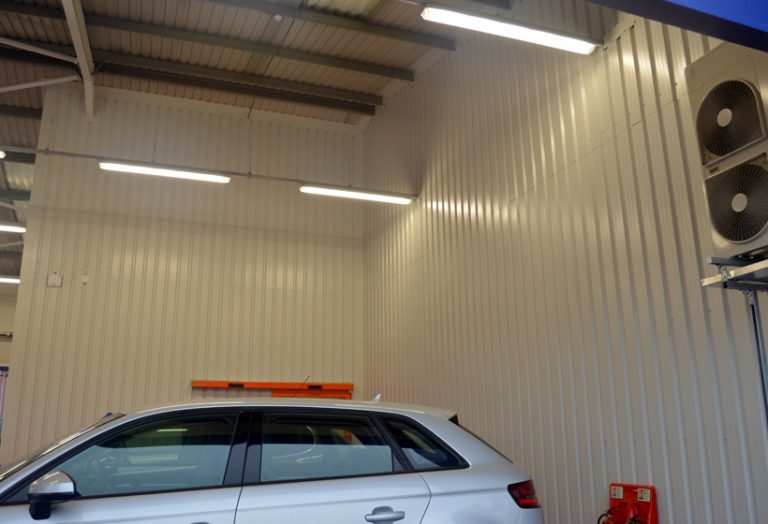
It is also common for industrial units to feature internal concrete walls or metal composite panels that require refurbishment as part of a wider maintenance programme. Concrete surfaces often become stained, discoloured or worn through years of operational use, and a fresh application of a high‑performance coating is essential to restore light reflectivity, improve hygiene standards and protect the substrate from further degradation. Metal composite panels present a different challenge; their internal face can suffer from abrasion, impact damage or coating failure, particularly in high‑traffic areas or where machinery operates close to the building envelope. Repainting these surfaces with a durable, industrial‑grade coating system ensures a uniform finish, reinforces the protective layer and maintains compliance with modern operational and safety requirements.
Coating systems play a central role in internal refurbishment, particularly in environments where visibility, hygiene and durability are essential. Industrial units, warehouses and manufacturing facilities often suffer from reduced light reflectivity due to ageing coatings, dust accumulation and surface degradation. Applying a high-performance water-based coating system, provides a technical solution that improves reflectivity, enhances safety and delivers long-term protection. These coatings adhere effectively to a wide range of substrates including plasterboard, steel, composite panels and previously painted surfaces. Their fast-drying formulation allows refurbishment works to be completed with minimal disruption to operations, while the two-coat system ensures a robust, consistent finish capable of withstanding industrial conditions.
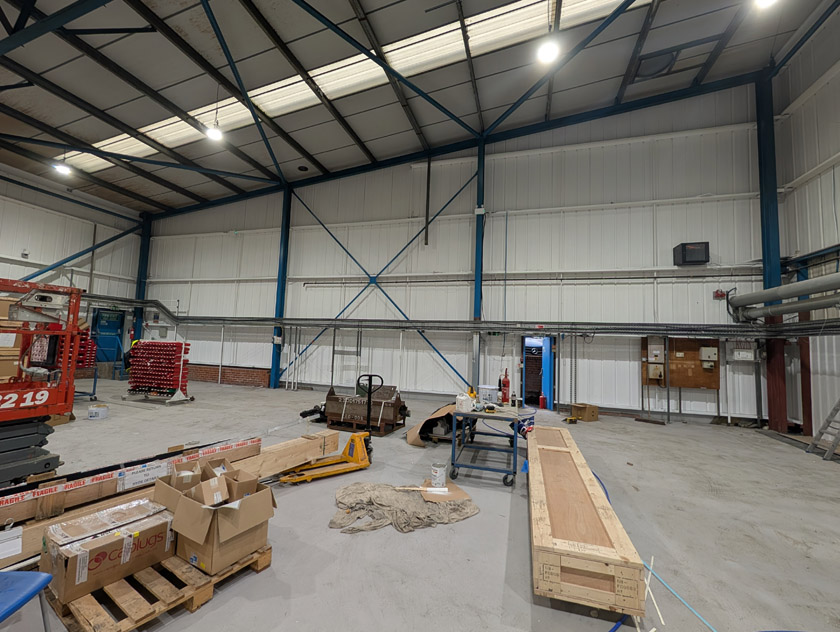
Internal refurbishment also extends to structural steelwork, ceiling voids, loading bays and ancillary rooms such as canteens, staff areas and welfare facilities. Steelwork often requires preparation to remove surface contaminants before receiving a protective coating that prevents corrosion. Ceilings and high-level areas benefit from coatings that reduce shadowing and improve overall illumination, supporting safer navigation and more efficient workflows. Loading bays, which experience heavy mechanical wear, are refurbished using impact-resistant coatings that maintain a clean and functional appearance even under demanding use.
Retail environments present a different set of technical requirements. Internal refurbishment in these spaces must align with brand standards, tenant specifications and customer-facing expectations. Damaged panels, inconsistent finishes and ageing coatings can negatively affect customer perception and reduce the commercial value of the unit. Refurbishment programmes for retail spaces focus on delivering a clean, modern and uniform interior that meets the technical requirements of the incoming tenant while ensuring long-term durability. This often involves a combination of panel repairs, full internal repaints and targeted upgrades to high-traffic areas.

A key consideration throughout all internal refurbishment projects is operational continuity. Industrial and commercial buildings rarely have the luxury of extended downtime, so refurbishment must be planned around live operations. This requires careful sequencing of works, controlled access routes, dust management and surface protection. By using fast-curing coatings and efficient installation methods, refurbishment teams can complete works with minimal disruption while maintaining strict safety standards.
The long-term value of internal refurbishment lies in its ability to extend the lifespan of the building’s internal structure, reduce ongoing maintenance costs and improve the working environment for staff. Refurbished interiors support better lighting conditions, improved safety compliance and enhanced brand presentation. For industrial clients, this translates into smoother workflows and reduced accident risk. For retail clients, it results in a more appealing and commercially viable space.
Contact us for a free site survey and no obligation quotation, so that we can assess your internal space and make recommendations based on our extensive experience.
Internal refurbishment within industrial, commercial and retail environments is a critical component of maintaining structural integrity, operational efficiency and compliance with modern building standards. Unlike external refurbishment, which focuses on weathering, corrosion and façade deterioration, internal refurbishment deals with the…