How Can We Help You?
Please provide a few details below and we will respond to you as soon as possible.

Metal cladding systems are engineered to provide durable, long‑lasting protection to commercial and industrial buildings. Yet even the highest‑performing coated steel or aluminium sheets are vulnerable to environmental contamination. Dirt accumulation, organic growth, and biofilm formation are common issues across the UK, and when left untreated they can accelerate coating degradation and, ultimately, corrosion of the underlying substrate. Understanding why these contaminants develop, when they are most prevalent, and how they affect the integrity of the cladding is essential for maintaining building performance.
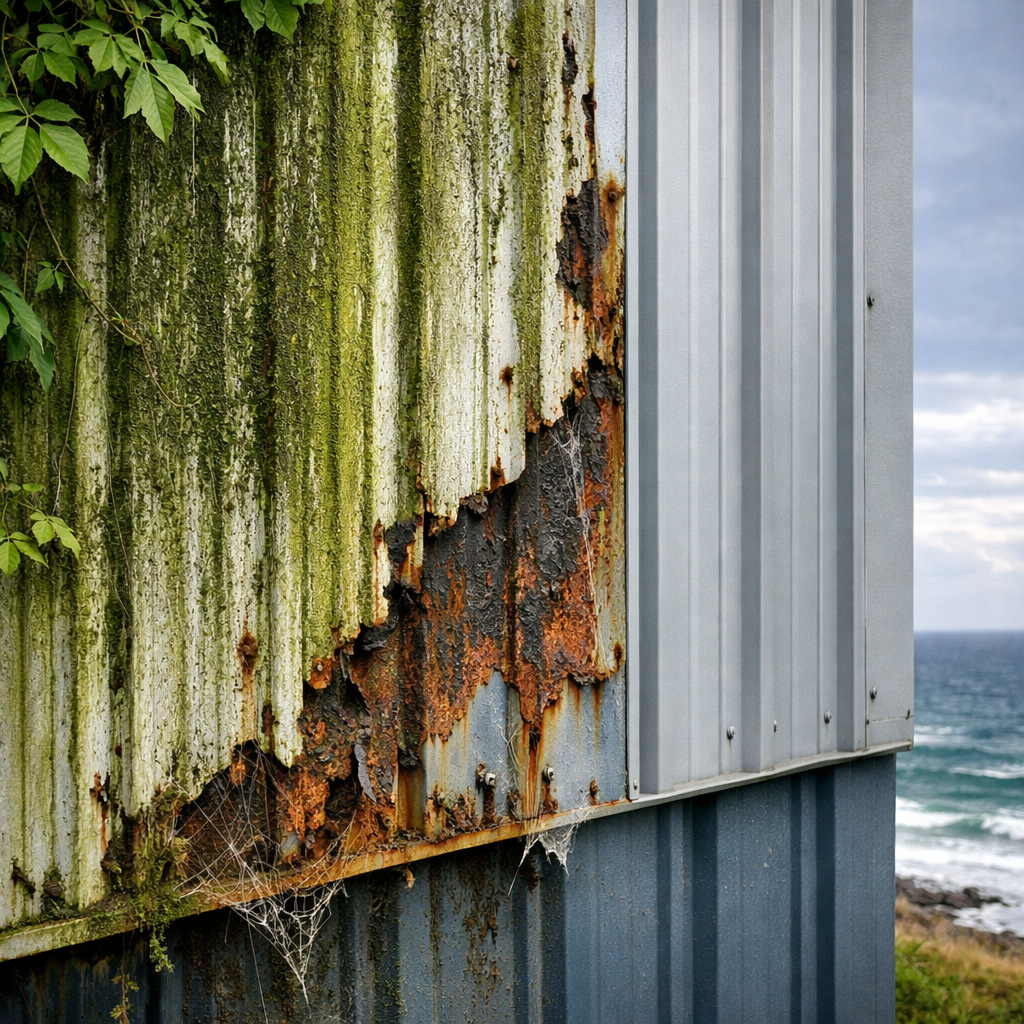
Dirt and algae build‑up is influenced by a combination of seasonal, environmental, and site‑specific factors. In the UK climate, the highest risk period typically spans from late spring through early autumn. Warmer temperatures, increased daylight hours, and elevated humidity levels create ideal conditions for biological growth. Algae spores thrive when moisture is retained on the surface of the cladding, and this is particularly common from May to September. However, winter months also contribute to the problem. Prolonged periods of rainfall, reduced UV exposure, and slower evaporation rates allow moisture to sit on the surface for longer, creating a persistent damp environment that encourages the early stages of biofilm formation.
The position and orientation of the building significantly influence the severity of contamination. North‑facing elevations receive minimal direct sunlight, meaning they remain cooler and wetter for longer periods. This reduced thermal drying effect allows algae and lichen to colonise the surface more readily. Conversely, south‑facing elevations may experience accelerated dirt accumulation due to thermal uplift and airborne particulates adhering to warm surfaces. Buildings located in shaded areas, particularly those surrounded by overgrown trees or dense vegetation, are at even greater risk. Organic debris, pollen, and leaf litter introduce nutrients that support microbial growth, while the shade prevents the cladding from drying effectively.
Coastal locations present another challenge. Salt‑laden air deposits hygroscopic particles onto the cladding surface. These particles attract and retain moisture, creating a micro‑environment that supports both corrosion and biological growth. Industrial areas also contribute to contamination through airborne pollutants, hydrocarbons, and metallic particulates that settle on the cladding and form a sticky layer that traps moisture and organic matter.
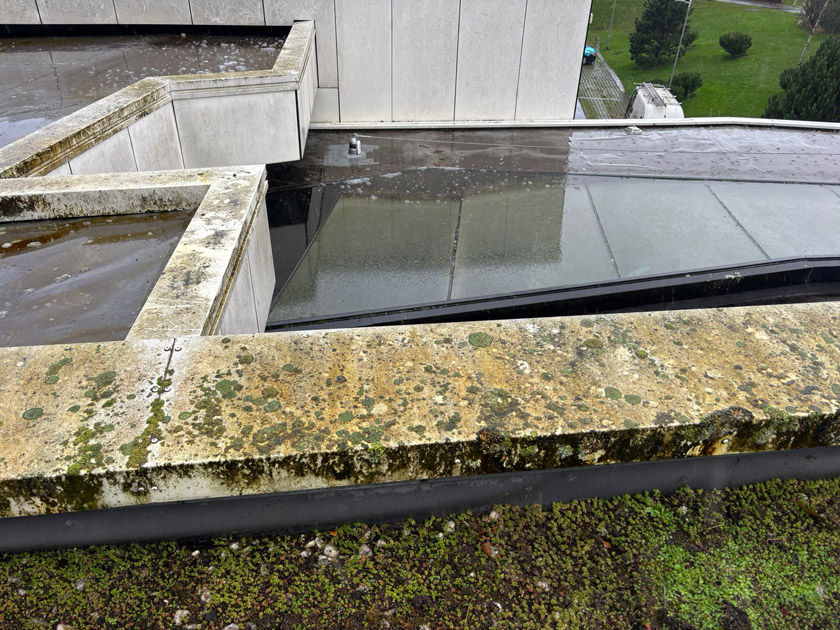
Once dirt and algae begin to accumulate, the impact on the coating system becomes progressively more severe. Organic growth retains moisture against the surface, disrupting the coating’s ability to perform as a protective barrier. Over time, this constant wetting cycle can lead to osmotic blistering, micro‑cracking, and chalking of the coating. As the coating deteriorates, the substrate becomes increasingly exposed to oxygen and moisture, accelerating the electrochemical reactions that cause corrosion. In extreme cases, where contamination has been left untreated for several years, the coating may erode to the point where bare metal is visible. At this stage, corrosion can spread rapidly, compromising the structural integrity of the sheet and increasing the risk of perforation.
Preventing this level of deterioration requires a combination of environmental management and proactive maintenance. Cutting back overgrown trees, improving airflow around the building, and reducing areas of persistent shade can significantly decrease moisture retention on the cladding. Regular cleaning cycles help remove dirt, pollutants, and organic matter before they can form a stable biofilm. This not only improves the appearance of the building but also extends the lifespan of the coating system by reducing the stress placed upon it.

However, once corrosion has begun, cleaning alone is not sufficient. At Cladding Coatings, we specialise in identifying and repairing corrosion at all stages of development. Our team can treat affected areas by removing loose or degraded coatings, preparing the substrate, and applying specialist anti‑corrosion treatments designed to halt further deterioration. Where the coating system has failed more extensively, we can re‑coat the metal roof or wall cladding using high‑performance, site‑applied coating systems engineered for long‑term protection. These systems restore the integrity of the building envelope, improve resistance to environmental contamination, and provide a durable, aesthetically consistent finish.
Dirt and algae build‑up may seem like a superficial issue, but its impact on metal cladding is far more significant than appearance alone. Contact our team to discuss how we can help.

How Cladding Refurbishment Helps Landlords Stay Compliant Minimum Energy Efficiency Standards (MEES) for commercial properties are entering a new phase, following the Government’s Interim Response published in June 2026. After several years of uncertainty, landlords now have clearer timelines for…